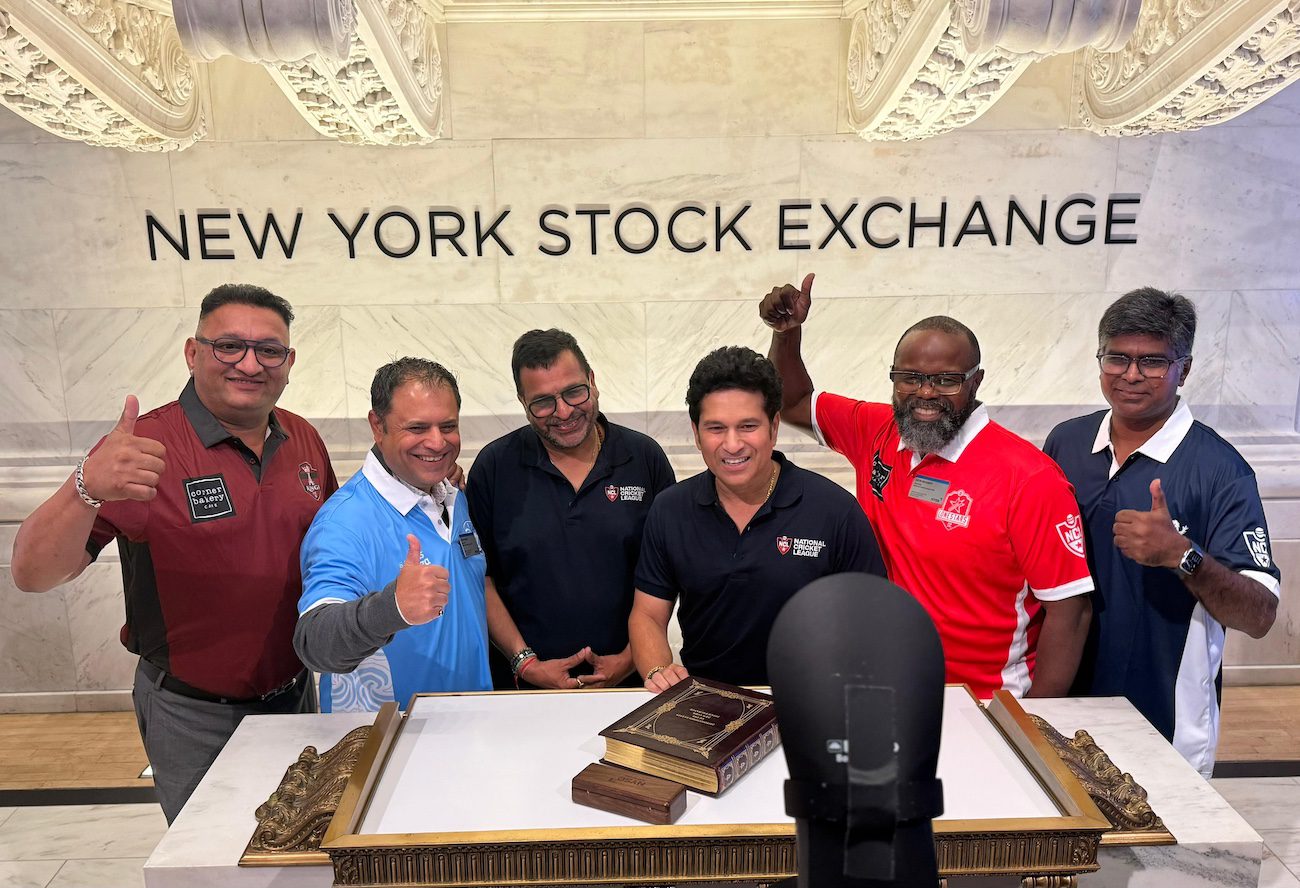
When cricket legend Sachin Tendulkar stood alongside National Cricket League (NCL) Chairman Arun Agarwal on the floor of the New York Stock Exchange (NYSE) to ring the opening bell, the moment transcended sport—it marked cricket’s formal entry into America’s financial and cultural consciousness.
This historic event, covered widely by major media including American Kahani, PRNewswire, and Yahoo Finance, signaled a powerful message: cricket has arrived in America, and the NCL is leading its transformation.
A Symbolic Start — From Wall Street to Dallas
The bell-ringing ceremony wasn’t just ceremonial—it launched a new era.
Only hours later, the inaugural NCL tournament began at the University of Texas at Dallas, uniting six professional franchises in a 10-day celebration of cricket, community, and culture.
Each match night brings a unique theme—honoring veterans, healthcare heroes, alumni, and sustainability advocates—reflecting NCL’s commitment to community engagement and inclusivity beyond the field.
America’s Growing Cricket Movement
According to CBS News and USA Cricket, over 400 cricket leagues now operate across the United States, representing more than 200,000 active players. The momentum accelerated after the 2024 ICC T20 World Cup, which drew 190,000 fans to U.S. venues and made headlines when Team USA defeated Pakistan, shocking the cricketing world.
From that moment, cricket in America stopped being a niche immigrant pastime—it became a conversation about national sporting identity.
The Business of the Game
Cricket’s financial footprint in the U.S. is expanding rapidly.
Following the model that made the Indian Premier League (IPL) a global success, NCL combines city-based franchises, corporate partnerships, and celebrity ambassadors to build an economically sustainable ecosystem.
The NYSE partnership symbolizes institutional confidence in cricket’s American potential—bridging Wall Street investment with grassroots passion.
The Cultural Challenge
Despite this momentum, cricket still faces an awareness gap.
A YouGov survey before the 2024 T20 World Cup found that only 10% of Americans recognized Major League Cricket, while awareness for international tournaments remained even lower.
NCL understands that to thrive in America, cricket must adapt, not just arrive. That’s why the league focuses on high-energy T10 matches, entertainment-driven events, and American cultural integration—transforming cricket into a format that fits U.S. sporting culture without losing its global soul.
Why This Moment Feels Different
What sets this era apart is the perfect alignment of factors:
- Institutional partnerships like NYSE and UT Dallas
- Global icons like Sachin Tendulkar lending credibility
- Recent U.S. success in international cricket
- A growing and passionate South Asian diaspora
Add to that America’s proven ability to adopt and elevate global sports—like soccer—and it becomes clear: cricket’s time in America has truly come.
The NCL Vision
For the National Cricket League, this isn’t just about matches—it’s about movement.
By building a professional platform for American and international players, the NCL aims to make cricket accessible, entertaining, and commercially viable at every level.
As Chairman Arun Agarwal emphasized, NCL is not just organizing games—it’s building the foundation of cricket’s American future.
The NYSE bell was more than a signal to investors; it was a call to fans, a challenge to skeptics, and a promise to the next generation that cricket belongs on American soil.
About NCL
The National Cricket League (NCL) is a premier U.S.-based professional cricket league founded to elevate cricket to mainstream American sports culture. With international stars, strong community engagement, and a vision rooted in inclusivity and excellence, NCL is shaping the future of cricket in America.
Reference:
Based on media coverage originally published by American Kahani, PRNewswire, Yahoo Finance, and others.
Read the full American Kahani article here:
👉 Wall Street Takes a Look: How Cricket Is Finally Finding Its American Moment — Or, Is It?